
© 2008-2024 Musica Inspirata
Inspired Music
bagpipe construction
Maintenance
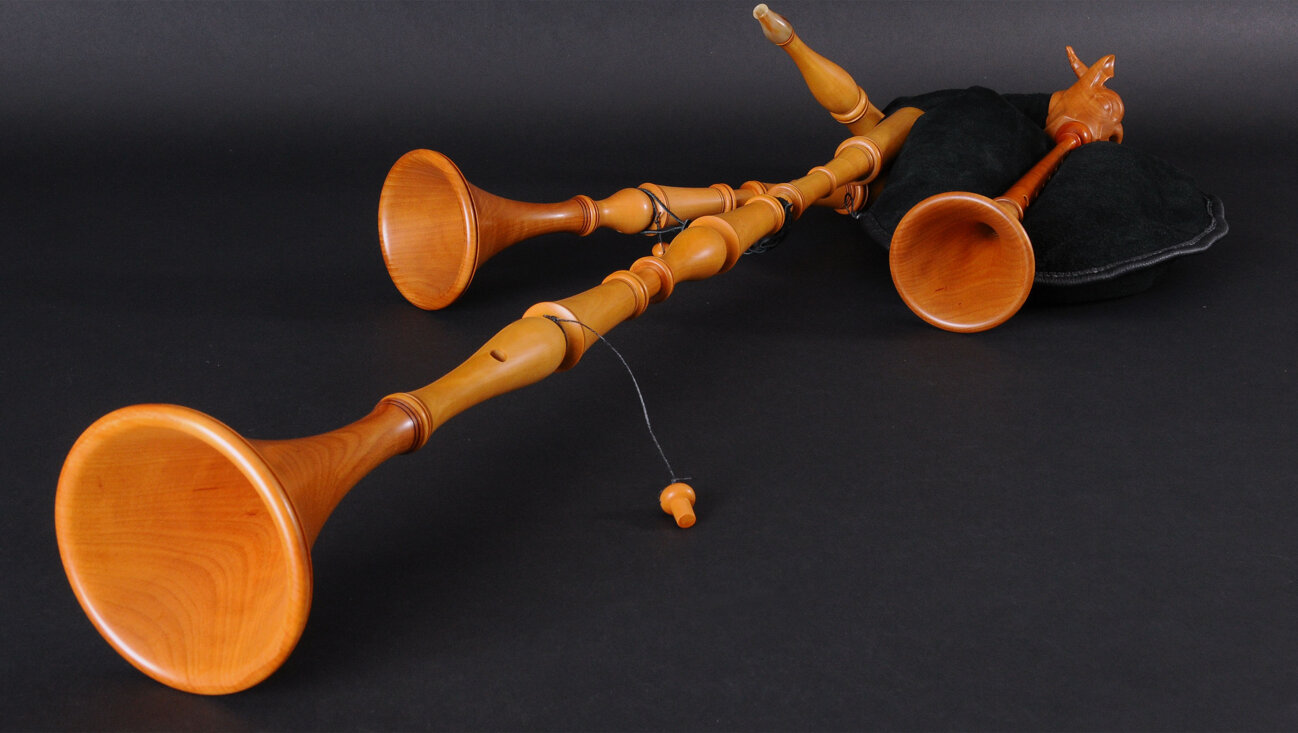
Bagpipes are instruments capable of an incredibly harmonious and engaging sound that can only be achieved through careful tuning and maintenance. Their construction features are rather complex since the various parts are made with different materials such as wood, cane, leather, horn, and metal, and they simultaneously use different reeds, both single and double. Each component therefore requires specific attention.
The main parts of a bagpipe (chanter, drones, blowpipe, and their stocks) are made of wood, a material that, even after being cut and many years of seasoning, continues to remain alive and capable of constantly changing according to environmental conditions. Well-seasoned wood, freed from its internal tensions, will still change its dimensions based on external temperature and humidity conditions. At the end of the drying process, the wood's moisture is simply in equilibrium with the external environment. Changing the environment will also change the equilibrium point. The moisture content of wood can vary on average between 10% and 20% depending on the temperature and humidity of the air, but in extreme climatic conditions, it can exceed these values, causing serious deformations and irreversible damage to the instrument. Generally, low temperatures combined with humid air tend to increase the volume of the wood, while high temperatures and dry air tend to decrease it. A good bagpipe player must learn to accommodate these natural tendencies by learning to take care of the instrument to keep it always in good condition and prevent possible risks of breakage and deformation.
Playing your bagpipe regularly is the first and most important step for good instrument care. A bagpipe that is not played will slowly deteriorate and, above all, leaving it unused for long periods would not allow you to correct, with small timely interventions, the slight changes that occur daily due to time and climate. Here, then, is a list of everything we can do to keep our instruments in order.
- Grafts and bindings
All the various wooden parts of the bagpipe are assembled by means of joints. The tightness of the joints is ensured by thread bindings. Each binding must be done perfectly so as not to leave any space for air leaks, while at the same time ensuring sufficient ease of assembly and disassembly. Especially in the tuning joints of the drones, the amount of thread should not be excessive so that they can be operated with one hand during tuning phases. Waxed, tarred, or uncovered threads can be found on the market. It is recommended to purchase thread without added wax or tar. This way, each player can cover it with the most suitable material according to their needs at the time. The joints of the stocks, those closest to the bag, and the tuning joints of the drones have different needs, so it is best to proceed differently. For the joints of the stocks, the first winding should be done with very tarred thread, so as to make it adhere to the wood, while the subsequent windings should be completed with waxed thread until the optimal thickness is reached. For the tuning joints of the drones, the first winding should always be done with tarred thread, while the subsequent windings should be completed with uncovered thread to ensure both solidity and smooth movement. The outermost part of each binding can be coated with cork grease for musical instruments to make the joints slide smoothly. On the drones, the binding towards the stocks must always be stronger than that of the tuning joints to avoid pulling the entire drone out of the bag during tuning. The binding should be done evenly, distributing the windings homogeneously until the necessary thickness is reached. If the wood shrinks, thread must be added; if the wood increases in volume, thread must be promptly removed to prevent the joint from getting stuck. If the binding degrades with use or is no longer attached to the wood, it must be completely removed and redone. If a binding has been made with too many windings and, after a long playing session or a sudden increase in humidity, the piece can no longer be removed, do not force it under any circumstances. The wood could break. Place the instrument in a dry environment and try again after several hours. If it remains stuck, contact the maker.
- Insufflator and valve
It is important that the internal bore of the blowpipe allows the greatest possible airflow. A blowpipe that lets little air through will make playing difficult and cause instability and tuning defects. The blowpipe can accumulate a large amount of dirt, so it is important to regularly clean the hole with a brush to remove any possible blockage. You should also periodically check the proper functioning of the valve mounted at the end of the blowpipe. To do this, you need to remove the drones and the chanter and close the stocks with plugs, leaving only the blowpipe mounted; inflate the bag as much as possible and check that no air escapes from the blowpipe. If there are any leaks, you will need to carefully check the condition of the valve and, if necessary, replace it with a new one. Always make sure the valve is well moistened before carrying out the check. If the valve is dry, moisten it with a few drops of water to allow the leather to soften and seal the bore properly.
- Ceppi
The bores of the stocks should be cleaned regularly down to the base using a brush or paper swabs. A large amount of product used for treating the bag can accumulate inside them. Excessive buildup of this material over time can cause stability problems for the drones. You should also check that the bindings of the stocks to the bag are always in good condition and do not allow air to leak. To do this, follow the same procedure used for checking the blowpipe valve and make sure that at the junction between the bag skin and the stocks there are no small air leaks. Leaks can be detected by listening for a slight hiss or by observing the appearance of bubbles.
- Bordoni
After each performance, it is advisable to disassemble the drones and check that too much condensation has not formed inside them. If so, it is best to help them dry by dabbing the inner bore with a soft brush or a cloth.
- Singing
This is the most important part of the instrument and also the most fragile. It must always be handled with extreme care to avoid irreversible breakage. The fact that it faces downward means that a large amount of dirt can accumulate inside, which, in a short time, could cause significant changes in intonation. Therefore, the internal bore should be cleaned regularly with a soft brush, especially in the upper part, which is also the narrowest. Likewise, particular attention should be paid to cleaning all the finger holes. Finger grease and dirt in general tend to accumulate inside them, significantly altering the instrument's intonation. Special care must be taken with the headjoint when removing or inserting it into its socket. During these operations, always grip the headjoint at the highest part near the socket, applying force only to the widest turned section. Gripping lower down would only twist the wood fibers at the thinnest point, causing sudden breakage. In the case of the headjoint, you should therefore follow the previously given instructions on bindings even more scrupulously, so that the joint is never too tight nor too loose.When removing or inserting the headjoint, you must also always keep it aligned with its socket. Tilting the headjoint during these operations almost always results in the reed breaking or being damaged, as it would inevitably hit the inner wall of the socket.
- Bag
Very often, people tend not to give proper consideration to the maintenance of the bag. This is a very serious mistake because without a bag in perfect condition, even for a virtuoso musician, it will be impossible to get anything good out of the instrument. Bags are made from animal leather, which can be sheep (in some cases even goat) or cow. Sheep leather offers great advantages in terms of comfort, moisture control, and sound quality, but cow leather bags are by far more common. This is because sheep leather bags are very delicate, while cow leather bags still provide excellent results and are much more robust and durable. A bag, whether sheep or cow, must be an excellent air reservoir and must not have any kind of leaks. To check the seal of a bag, always follow the procedure described in the paragraph dedicated to checking the valve. Once all the stocks are plugged and the bag is fully inflated, it should be able to stay inflated for a few minutes. If it deflates quickly, it means there is a problem, and it is advisable to contact the manufacturer for proper advice. In addition to these seal checks, it is fundamentally important to periodically treat the inside of the bag with specific products available on the market under the name "Bag Seasoning." Very often, this treatment is forgotten because generally a quality cow leather bag almost never has sealing problems. In reality, the treatment is important not only for the seal of the bag but for a whole range of other positive effects that should not be overlooked. First of all, animal leather tends to dry out and hydrate just like wood. If we let the bag dry out too much, it would shrink, causing air leaks at the stocks. Moreover, dry leather is more likely to get damaged and crack. The treatment also plays a fundamental role as a humidity regulator. Some of its ingredients make it hygroscopic, allowing it to capture some of the moisture during playing and then slowly release it once at rest. Finally, the treatment also contains antibacterial and antifungal substances that are very important for the player's health. When should the treatment be done? The answer varies greatly depending on the use of the instrument and the climatic conditions to which it is exposed. In some cases, one treatment every 8 months is enough, in others even every 2 or 3 months. To understand when it's time, just rub the inner walls of the bag against each other; if you feel a gelatinous substance inside, then there is no need to intervene, but if the inner walls scratch and feel dry to the touch, then you need to proceed with the treatment.
- Bag treatment
To carry out the treatment, you need to remove the drones, the chanter, and the blowpipe from the bag and fill the stocks along their entire length with paper plugs so that the treatment does not dirty them inside. Follow the instructions on the label for preparing the product and pour it into the bag through the chanter stock. Also fill the chanter stock with paper, lay the bag on the table, and start massaging it so as to spread the treatment evenly inside the bag, working especially well on the seam area, the bindings of the stocks, and the area under the blowpipe. After spreading the treatment well, hang the bag with the chanter stock facing down, place a tray under the stock, remove the paper plug, and let the excess drain for a few hours. Clean the inside of all the stocks thoroughly, lay the bag flat on a surface, and let it rest overnight. The next day, the bagpipe is ready to be assembled and played. During the first few times you play after the treatment, it is advisable to occasionally check the inside of the chanter stock to make sure that any excess treatment is not dripping toward the reed.
- Oiling wood
Wood is an organic material that needs to be nourished in order to preserve it over time. Exposure to atmospheric agents and the condensation that forms during use create significant stress on the wood fibers, so it is important to oil it periodically. There are specific oils for musical instruments, but in general, they are all substances of mineral origin, which I would not recommend using. In my opinion, the best oil for wood care is sweet almond oil. To be sure it does not contain any added ingredients, it is better to buy it at a herbalist shop, asking for pure, cold-pressed sweet almond oil. It is sold with the label "Food supplement". The oil should be applied to all the wooden surfaces of the instrument, both outside and along the bores. To oil the exterior, just use a soft cloth soaked in oil, while for the interior the operation is more complex and you can use special brushes for musical instruments or pour the oil directly along the bore. If you pour the oil directly into the bores, you must first cover the work surface with absorbent paper or cardboard to soak up any drips. Oiling the stocks requires a bit of attention so as not to dirty the bag. The inside of the stocks can be oiled with an oil-soaked cloth or paper swab, while the outside should be oiled with a cloth, taking care not to stain the bag's leather.The internal bore of the chanter, when oiled, tends to raise the instrument's tuning in the first few days. Therefore, avoid oiling the chanter bore a few days before you have to play with other bagpipes or fixed-pitch instruments. Once all the wooden parts have been oiled, let them dry for at least a couple of days before reassembling the instrument. Usually, during the oiling process, all the bindings of the joints get oiled, so it is advisable to take the opportunity to renew them all before assembling the instrument. When should you oil the wood? As with the treatment of the bag, the answer varies greatly depending on the use of the instrument and the climatic conditions to which it is subjected. An instrument that is constantly exposed to climate changes, transported in the car trunk under the extreme heat of summer, or forced to play outdoors in winter will need to be oiled more often than one used exclusively at home. There are also countries with very dry climates throughout the year or, conversely, very humid climates. Ultimately, the type of wood also greatly affects the oiling frequency. Very hard exotic woods such as rosewoods (for example Dalbergia melanoxylon or Dalbergia retusa) tend to crack more easily than European woods and therefore need to be oiled more often. Considering only European hardwoods, follow the following general scheme based on the relative humidity of the air:
- 51% or more relative humidity – oil the wood every 8 months
- between 40% and 50% relative humidity – oil the wood every 6 months
- below 39% relative humidity – oil the wood every 4 months
- How to take care of the bagpipes
To properly store the instrument, you should use cases suitable for musical instruments, adequately padded inside and sufficiently rigid on the outside to ensure the safety of the bagpipe during transport. As soon as the practice session or concert is over, you should disassemble the various parts and check that excessive condensation has not accumulated. If so, dab all the holes with a soft brush or cloth. As for the drones, you should disassemble the upper sections (one for the tenors and two for the basses) and store them in the case. The sections inserted into the stocks should be left assembled to protect the single reeds during transport. However, you should pull out the joint by at least 10 mm to relieve the tension of the wood in the stocks. The blowpipe collects a huge amount of condensation and therefore should be disassembled and stored separately in the case, taking care to protect the valve so that it is not damaged during transport. The chanter should be disassembled in the same way, especially to allow the double reed to air out. The chanter's double reed is very delicate, and just leaving it assembled and damp in the bag overnight is enough for it to be attacked by mold. The bagpipes we build are all equipped with a double stock that allows you to remove the chanter while keeping the reed protected. If you do not have this double stock, you will need to cover the reed with a suitable protective cap. At this point, you can store the bag with the first sections of the drone inside the case. During spring and summer, these precautions are sufficient to preserve the instrument well. In the colder months and in environments with high humidity, it may be necessary to take out the various parts once you get home and leave them outside the case to facilitate drying. It is important to always keep the humidity of the environment where we store the instrument under control. To do this, you should equip yourself with a small thermo-hygrometer to always leave inside the case. The relative humidity of the air suitable for musical instruments is 50%-55%. If the thermo-hygrometer indicates a lower humidity, you should promptly raise the level by placing a musical instrument humidifier inside the case to avoid warping or cracking of the wood. If the relative humidity is very high, you should ensure good ventilation of the parts to prevent mold formation.
- Formation of cracks in wood
The main cause of crack formation in wind instruments is the difference in humidity between the inner wall of the bore and the outer surface of the instrument. The air introduced into the instrument by the musician reaches the bores at a temperature of around 30°C and with a relative humidity above 95%. In these conditions, the humidity tends to condense on the internal walls and is absorbed by the wood, which begins to expand. The outside of the instrument, remaining drier, cannot accommodate this internal tension and, in extreme cases, releases it by splitting the wood. This tendency increases with the thickness of the wood because in these cases the difference in humidity between the inside and outside is greater. The time of year when these breaks occur most often is when temperatures are lowest. When playing outdoors during the winter months, the moisture from the breath condenses instantly inside the bores and, unable to evaporate due to the low temperatures, continues to soak into the inside of the wood at great speed. In these cases, a crack on the outer wall can occur even during playing, but more often it will develop during the night. When we bring the instrument back into a heated environment, the difference in humidity between the inner and outer wall will increase even more rapidly until the wood gives way, and the next day we will make the sad discovery when opening the case. By subjecting the instrument to these stresses for a prolonged period, the correct question is not IF the wood will crack but only WHEN it will crack. In these cases, among amateur musicians, the legend easily arises that “it was made with a batch of defective wood” or “the wood was not well seasoned.” This type of analysis has no scientific basis because if the wood were not properly seasoned, it would tend to crack more easily in the hot months and especially with a certain uniformity of incidence between inside and outside. This type of crack, however, almost always occurs during the cold months, with instruments subjected to long outdoor playing sessions and with a very low incidence among experienced players.Avoiding the use of wooden wind instruments in extreme situations would be the best solution, but if we find ourselves having to do so, it would be advisable to take some precautions. First of all, oil the instrument very well with almond oil as indicated in the “wood oiling” section, especially in places where the wood is thicker. This will prevent moisture from easily penetrating inside the bore and will keep the outside of the instrument well hydrated. Have a well-treated bag so that it performs its hygroscopic function at its best. If necessary, install a condensation trap. After playing, carefully dry all the bores and avoid storing the instrument in an environment that is too hot and dry. If you live in a well-heated house, it is better to leave the instrument in the coolest room so that evaporation is as slow and even as possible. If the relative humidity in the house is very low, add a musical instrument humidifier inside the case. If possible, do not stress the instrument again for at least a couple of days and finally hope for good luck.
© 2008-2024 Musica Inspirata